Roswell: Book Of The Dead – Mythology, World Building, And The TV Show ‘LOST’

Story time.
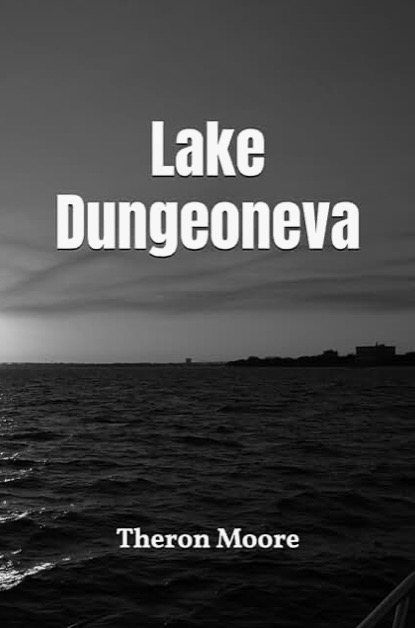
I recently wrote an essay exploring how the film Poltergeist influenced the writing of Lake Dungeoneva, the sequel to Roswell: Book Of The Dead. You can read the full piece on the Lake Dungeoneva Facebook page.
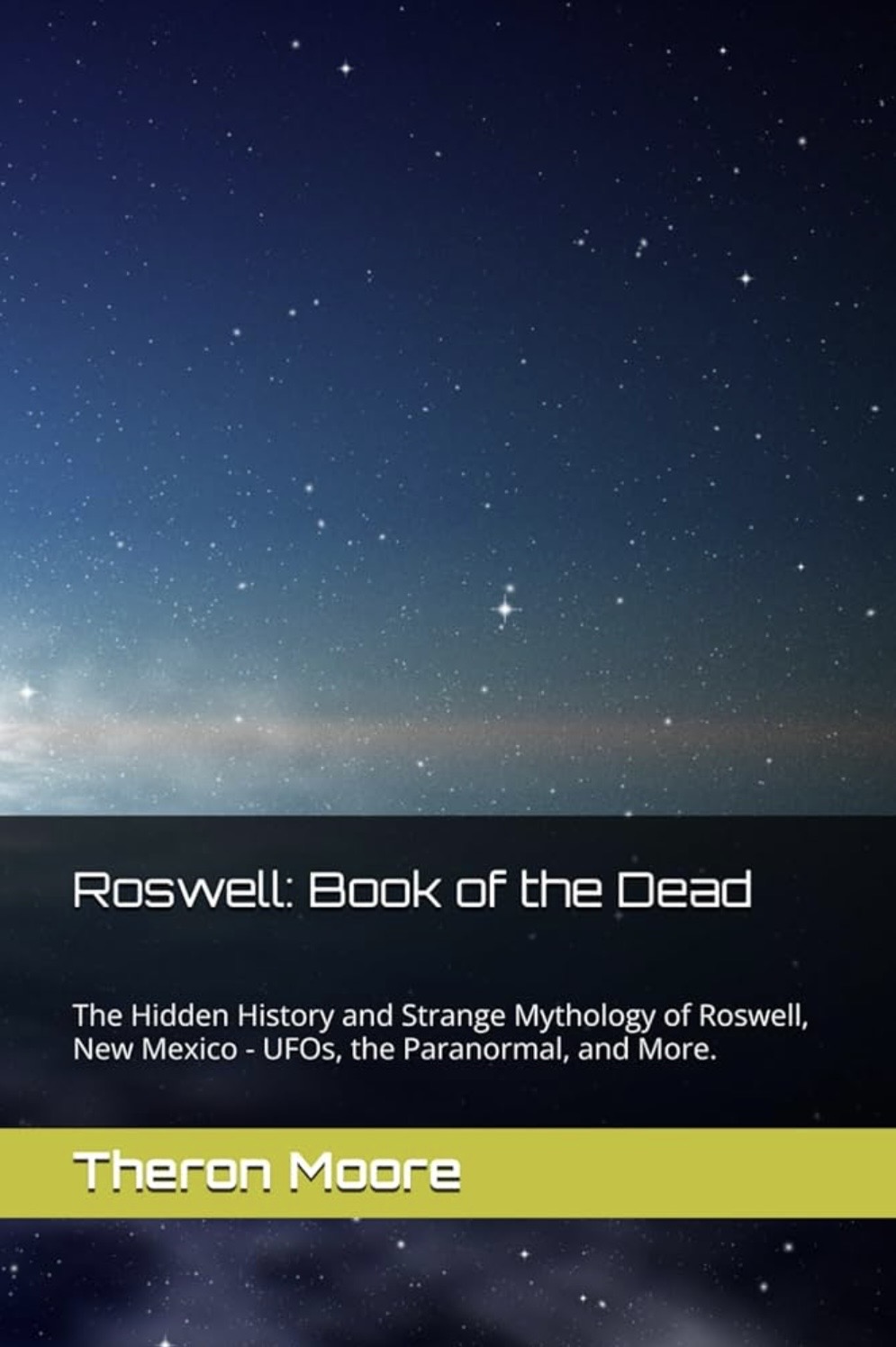
For those unfamiliar with these books, neither follows a linear narrative nor traditional novel structure. In fact, I never sat down to consciously write either one. The idea for Roswell: Book Of The Dead was inspired by a road trip my wife and I took to Roswell in 2022.
In The Beginning
The first thing I ever wrote for Roswell: Book Of The Dead were loose notes and ideas I had for this place called the “Center for Complete Annihilation, Casualty Statistics, and Battlefield Studies” located inside the “Duggar Test and Research Complex” outside of Roswell. That was it.
After that, stories, characters, and locations emerged on their own, usually when I was watching a movie or TV show or listening to music. These ideas just came to me and played out in my mind like some kind of film I was watching, and luckily enough, I was able to jot it all down and get them on paper.

The Influence Of Movies, TV Shows, And Music
For example, in Roswell: Book Of The Dead, “Dr. West” is a reimagining of a famous character best known as the anti-hero in Stuart Gordon’s cult horror films Re-Animator and Bride of Re-Animator.
Everything about Dr. West—especially his background—has been reimagined and expanded upon. And if you’re wondering how West arrived in Roswell and what he did at the “Center for Complete Annihilation, Casualty Statistics, and Battlefield Studies,” you’ll have to read Roswell: Book Of The Dead and find out. And did I mention Damien West, his son? That’s right, West has a son and that character is extremely interesting.
Another example is the mysterious monolith unearthed at the Duggar Test and Research Complex in 1976. It’s a nod and wink to 2001: A Space Odyssey, though I’ve developed an extensive history exploring its secretive nature and purpose.
While pop culture references permeate Roswell: Book Of The Dead, the television series LOST has without a doubt proved most influential. Its rich mythology and commitment to sustained mystery inspired my approach to worldbuilding in both Roswell: Book Of The Dead and Lake Dungeoneva.
Mythology & Worldbuilding
And there’s an important distinction here. Worldbuilding is the technical process of creating a fictional setting—the geography, history, rules, and systems that make a place function. Mythology is something deeper: it’s about meaning, interconnection, and cosmic significance. It’s the sense that everything is fated or destined to connect, that patterns exist beneath the surface making everything feel purposeful. LOST excelled at both, but it was the mythology—the island “choosing” people, everyone being connected by fate—that made it truly special.
But especially for Roswell: Book Of The Dead. The characters, the background, the timelines, everything—all of which (or maybe none) could explain why Roswell and the surrounding area tends to be at the epicenter of strange activity and phenomena.
In my mind, there’s a reason why the “Center for Complete Annihilation, Casualty Statistics, and Battlefield Studies” found within the secretive walls of the “Duggar Test and Research Complex” exists there and not, say, in Bernalillo or Silver City, NM.
History brought it to Roswell. Fate brought it to Roswell. It had to be there; it was destined to be there. And to understand that, a mythology had to be built in the background for you, the reader, to fully understand and engage with it.
It’s low-hanging fruit to mention Roswell and the UFO crash and never explore beyond that, but it takes serious worldbuilding to understand why they’re both “entangled” the way they are.

Entangled, by the way, is a term used in quantum physics. I’m using it to convey this point to you. Watching LOST over and over again drilled it into me that everything, or nearly everything, might be connected to each other or entangled in some way.
Everyone on “the island” was entangled together in some way, shape, or form. They coexisted in a bubble of oddball, anomalistic strangeness that was particular to the island (and surrounding areas), the characters, and that mythology.
The impression I’ve always had is that this made sense to the characters in the show, while the “reality” that permeated the “real world” they came from started not to. That was my takeaway with each season, including the ever-controversial season six. I wanted that for Roswell: Book Of The Dead—hell, I wanted that for Lake Dungeoneva too—and I got it, and more.
LOST was written in such a unique way that every show, every season, made it more layered and more textured, to the point where once you get towards seasons four and five, it had become a “real” place with “things” and “events” tied to a location, characters interacting with strange environments and problems with the space-time continuum, and somehow, some way, it made sense—and some of it didn’t.

Linear Versus Non Linear Storytelling
At times it was a linear show that followed traditional storytelling, and other times it deviated, and that’s where it became vastly more interesting to watch, and consume, and—excuse the pun—get lost in.
And I think underlyingly, when I wrote Roswell: Book Of The Dead and Lake Dungeoneva, I wanted to engage in that kind of storytelling where I didn’t feel obligated to present characters moving through a set plot in a three-act story arc with a beginning, middle, and end. That’s not how life is. Life is a journey with a million different segues and side adventures—and, well, you get the idea.
That’s why both books are presented as a collection of discovered materials—files, videotapes, audiotapes, and photographs—that the narrator of Roswell: Book Of The Dead has compiled and is sharing with readers as found artifacts. That’s where characters are introduced, and short stories are told, and histories and backgrounds are explained, etc. And if you read deep enough, especially in the story titled “G.O.D., the D.E.V.I.L, and H.E.L.L,” you might even catch a reference to LOST.
In closing, that’s how LOST fits in with Roswell: Book Of The Dead and Lake Dungeoneva. I’m going to end it here. I could probably write ten more essays about LOST, but I’ll save that for another time and maybe another book.